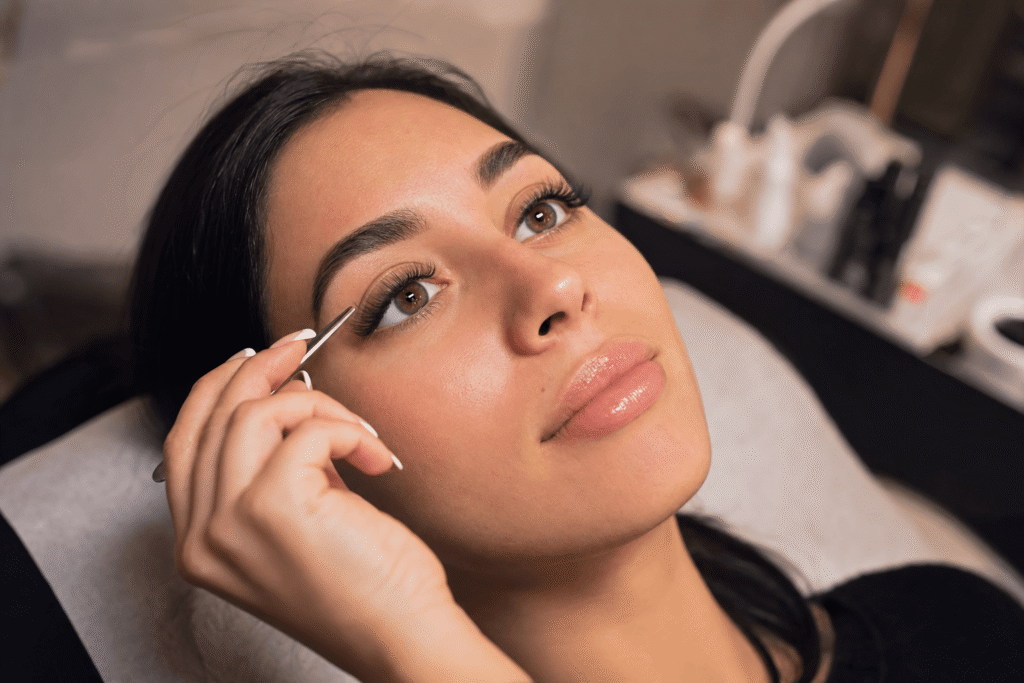
The short answer is that you should not do your own eyelash extensions. While it may seem like a cost-effective solution, applying eyelash extensions to yourself poses significant safety risks and typically yields poor results. Professional lash technicians spend hundreds of hours training to master proper application techniques, and attempting this delicate procedure on yourself can lead to eye injuries, infections, or permanent damage to your natural lashes.
Key Takeaways
- DIY eyelash extensions are unsafe due to the inability to see your own lash line clearly and the precision required
- Professional lash technicians complete 80-120 hours of training and certification
- Self-application risks include eye infections, corneal abrasions, allergic reactions, and permanent lash damage
- Safer alternatives include lash lifts, magnetic lashes, or strip lashes for temporary enhancement
- Professional application at certified salons like Labelle Eyes ensures proper technique and hygiene standards
Why You Cannot Do Your Own Eyelash Extensions Safely
Applying eyelash extensions requires precise placement of individual synthetic lashes onto your natural lashes using specialized adhesive. This process demands steady hands, proper lighting, and most importantly, a clear view of the lash line. When attempting to apply extensions to your own eyes, you face several insurmountable challenges that make safe application virtually impossible.
The physical limitations of self-application create dangerous conditions. You cannot see your own lash line at the proper angle while keeping your eyes closed, which is essential for safe application. Professional lash artists work on clients whose eyes remain closed throughout the procedure, allowing for precise adhesive placement without risk of fumes entering the eye or adhesive touching the eyelid.
Working on yourself requires you to either keep your eyes partially open or work blind, both of which significantly increase injury risk. The adhesive used for eyelash extensions contains cyanoacrylate, which releases fumes that can cause severe irritation if your eyes are not properly closed. Additionally, any slight hand tremor or miscalculation can result in adhesive contact with your cornea, potentially causing chemical burns.
Expert Insight: Professional lash technicians at Labelle Eyes in Montreal complete comprehensive training programs that include anatomy of the eye area, proper sanitation protocols, adhesive chemistry, and hundreds of practice hours. This expertise cannot be replicated through watching online tutorials.
Professional Training Requirements for Lash Extensions
Understanding the extensive training required for professional lash application highlights why this is not a suitable DIY project. Certified lash technicians must complete rigorous education that covers multiple aspects of safe and effective extension application.
Most certification programs require 80 to 120 hours of classroom instruction and hands-on practice. This training covers eye anatomy, lash growth cycles, proper isolation techniques, adhesive selection and safety, styling for different eye shapes, and sanitation protocols. After initial certification, experienced technicians continue education to stay current with new techniques and products.
The curriculum includes detailed study of contraindications, conditions that make lash extensions unsafe for certain clients. Technicians learn to identify eye infections, blepharitis, alopecia, and other conditions that require medical attention before lash application. Without this knowledge, you risk applying extensions over existing eye health issues, potentially making them worse.
| Training Component | Hours Required | Skills Covered |
|---|---|---|
| Eye Anatomy & Safety | 15-20 hours | Eye structure, contraindications, emergency protocols |
| Isolation Techniques | 20-30 hours | Separating individual lashes, preventing sticking |
| Adhesive Application | 25-35 hours | Proper bonding, drying time, volume techniques |
| Styling & Design | 10-15 hours | Eye shape analysis, curl selection, length mapping |
| Sanitation & Hygiene | 10-20 hours | Sterilization, disposable supplies, infection prevention |
Serious Health Risks of DIY Lash Extensions
The health risks associated with self-applied eyelash extensions extend far beyond poor cosmetic results. Your eyes are extremely sensitive organs, and improper lash extension application can cause both immediate injuries and long-term damage.
Eye infections represent one of the most common complications of DIY lash extensions. When proper sanitation protocols are not followed, bacteria can transfer to the eye area, leading to conditions like conjunctivitis or blepharitis. These infections cause redness, swelling, discharge, and discomfort that may require medical treatment with prescription antibiotics.
Allergic reactions to lash adhesives are another significant concern. Professional adhesives contain chemicals that can cause sensitivity reactions ranging from mild irritation to severe allergic responses. Without proper patch testing and knowledge of ingredient sensitivities, you may expose yourself to allergens that cause swelling, itching, or contact dermatitis around the eye area.
Corneal abrasions occur when tools or extensions accidentally scratch the surface of your eye. These injuries are painful and increase your risk of infection. Professional technicians use specialized techniques to protect the eye during application, but when working on yourself, the risk of accidental contact increases dramatically.
Permanent damage to your natural lashes can result from improper extension weight, poor adhesive placement, or incorrect removal techniques. When extensions are too heavy for your natural lashes or are glued to multiple lashes at once, they create tension that can lead to traction alopecia. This condition causes permanent hair follicle damage, preventing future lash growth in affected areas.
Equipment and Materials You Would Need
Even if you could overcome the physical challenges of self-application, acquiring the necessary professional-grade equipment and materials would be costly and complex. Professional lash technicians invest thousands of dollars in supplies and tools designed specifically for safe extension application.
Essential equipment includes surgical-grade tweezers for isolation and application, specialized adhesive formulated for eye area use, medical-grade tape for lower lash protection, gel pads to shield the lower lash line, individual synthetic lash extensions in multiple lengths and curls, a magnifying lamp for precision work, and a professional lash bed or reclining chair for proper positioning.
Quality professional adhesive alone costs between $30 and $80 per bottle and has a limited shelf life once opened. These adhesives are formulated to cure at specific humidity and temperature levels, requiring environmental control that most homes cannot provide. Using expired or improperly stored adhesive dramatically increases the risk of poor retention and allergic reactions.
Considering professional eyelash extensions in Montreal? Schedule a consultation at Labelle Eyes to discuss your lash goals with our certified technicians and learn about our safety protocols.
Safer Alternatives to DIY Eyelash Extensions
If you are looking for enhanced lashes without professional extension application, several safer alternatives can provide beautiful results without the risks associated with DIY extensions.
Lash Lifts: A professional lash lift in Montreal curls your natural lashes upward, creating the appearance of longer, fuller lashes without extensions. This treatment lasts 6 to 8 weeks and requires professional application but involves less ongoing maintenance than extensions. The process uses lifting solutions similar to those used in hair perming, applied carefully to avoid eye contact.
Magnetic Lashes: These temporary false lashes use tiny magnets to attach to your natural lashes or to a magnetic eyeliner. They offer the look of fuller lashes without adhesive and can be applied at home relatively safely. Magnetic lashes are removed each night, eliminating the risks associated with permanent adhesive bonds.
Strip Lashes: Traditional false lash strips remain a popular option for temporary enhancement. Modern formulations of lash adhesive designed for strip lashes are safer than extension adhesives because they are meant for skin contact on the eyelid rather than bonding to individual lashes. With practice, most people can safely apply and remove strip lashes at home.
Lash Serums: Growth-enhancing serums containing peptides and vitamins can improve the length, thickness, and health of your natural lashes over time. While results take several weeks to become noticeable, these products provide enhancement without any application risks. Look for ophthalmologist-tested serums specifically formulated for use near the eyes.
Mascara Techniques: High-quality mascaras combined with proper application techniques can significantly enhance your natural lashes. Layering formulas, using lash primers, and employing curling techniques can create impressive results without any risk to your eye health or natural lash integrity.
What Happens During Professional Application
Understanding the professional extension application process reveals why attempting this procedure on yourself is impractical. The typical appointment at a salon like Labelle Eyes in Montreal takes 90 minutes to 2 hours for a full set, with the client lying comfortably with eyes closed throughout the entire procedure.
The process begins with a thorough consultation where the technician assesses your natural lash health, discusses your desired look, and determines the appropriate extension length, curl, and thickness. This customization ensures results that complement your eye shape and facial features while maintaining the health of your natural lashes.
Before application begins, the technician cleanses the lash line to remove all traces of makeup, oil, and debris. This step is critical for proper adhesive bonding. Gel patches are then applied to the lower lash line to protect the skin and separate lower lashes from the application area.
During application, the technician uses one set of tweezers to isolate a single natural lash while using a second set to pick up an extension that has been dipped in adhesive. The extension is then carefully placed on the isolated natural lash, positioned 0.5 to 1 millimeter away from the eyelid to prevent irritation. This isolation and application process is repeated for each individual lash, typically resulting in 80 to 120 extensions per eye.
Throughout the procedure, the technician monitors adhesive drying time, adjusts for any sensitivities, and ensures proper ventilation to minimize fume exposure. After application is complete, the lashes are brushed and checked for any sticking, where multiple natural lashes have been accidentally bonded together.
Cost Comparison: DIY Attempts vs Professional Service
While saving money may motivate the desire to apply your own extensions, a realistic cost analysis shows that professional application offers better value when you factor in the equipment investment, potential for mistakes, and health risks of DIY attempts.
Initial equipment costs for DIY lash extensions would include professional tweezers ($40-$80), adhesive ($30-$80), lash extensions in multiple sizes ($50-$100), gel patches ($15-$25), medical tape ($10-$15), and a magnifying light ($30-$100). This brings your initial investment to approximately $175 to $400 before attempting your first application.
Professional full sets at quality salons typically range from $150 to $300, with fills needed every 2 to 3 weeks costing $60 to $120. While this represents an ongoing expense, professional application includes the expertise that ensures safe application, proper lash health maintenance, and quality results. You also avoid the cost of correcting mistakes or treating complications from failed DIY attempts.
Medical costs associated with treating eye infections, allergic reactions, or injuries from improper application can easily exceed several hundred dollars. Emergency room visits, ophthalmologist consultations, and prescription medications add up quickly, not to mention the discomfort and potential time off work due to eye problems.
How to Find a Qualified Lash Technician
If you have decided that professional application is the safer choice, selecting a qualified lash technician is essential for ensuring both beautiful results and eye health protection. Several factors help identify experienced, properly trained professionals.
Certification and training credentials should be prominently displayed or readily available upon request. Reputable technicians complete recognized certification programs and continue their education regularly. Ask about their training background, how long they have been practicing, and whether they carry liability insurance.
Sanitation practices are non-negotiable. During your consultation, observe whether the technician uses disposable supplies where appropriate, properly sanitizes reusable tools, washes hands before beginning work, and maintains a clean workspace. Professional salons follow strict hygiene protocols similar to those used in medical settings.
Portfolio review provides insight into the technician’s skill level and artistic style. Examine before and after photos of previous clients, looking for natural-looking results without visible clumping, even distribution, and appropriate length proportions. Be wary of portfolios showing only extreme looks, as this may indicate limited versatility.
Client reviews and testimonials offer valuable information about others’ experiences. Look for feedback that mentions safety, comfort during application, lash health maintenance, and retention quality. Red flags include multiple complaints about eye irritation, poor retention, or unsanitary conditions.
At Labelle Eyes in Montreal, our certified lash technicians provide personalized consultations, use premium products, and follow rigorous sanitation protocols to ensure your safety and satisfaction. We prioritize the health of your natural lashes while creating beautiful, customized results.
Expert Insight: During your first consultation, a skilled technician will assess your natural lash health and may recommend postponing extensions if you have any eye irritation, infection, or recent eye surgery. This professional judgment protects your eye health and ensures optimal results.
Maintaining Extensions: Professional vs DIY Challenges
Proper maintenance is crucial for lash extension longevity and eye health. Professional technicians provide detailed aftercare instructions and are available to address any concerns between appointments. DIY attempts lack this ongoing support and guidance.
Professional aftercare includes avoiding water on the lashes for the first 24 to 48 hours, cleaning lashes daily with specialized foam cleansers, brushing through extensions with a clean spoolie brush, avoiding oil-based products near the eye area, and scheduling fills every 2 to 3 weeks as natural lashes shed.
When problems arise with professionally applied extensions, such as premature shedding or discomfort, you can return to your technician for assessment and correction. With self-applied extensions, you have no recourse beyond attempting to fix problems yourself, which often compounds the original issues.
Safe removal is another critical consideration. Professional removal uses specialized adhesive remover applied carefully to dissolve bonds without pulling on natural lashes. Attempting to remove extensions yourself, especially by pulling or picking at them, almost always damages your natural lashes and can create bald patches that take months to recover.
Legal and Regulatory Considerations
The beauty industry is regulated to protect consumer safety, and eyelash extension application requires licensing in many jurisdictions. While you can technically do whatever you want to your own body, understanding these regulations highlights the complexity and risk involved in lash extension application.
In Quebec, estheticians who apply eyelash extensions must complete approved training programs and work in licensed establishments that meet health and safety standards. These regulations exist because of the potential for serious eye injuries and infections when proper protocols are not followed.
If you were to apply extensions to another person without proper licensing, you would be operating illegally and could face fines or legal liability if the person experienced injury. These same risks exist when you work on yourself – you simply have no one else to hold responsible if something goes wrong.
Insurance considerations are also relevant. If you experience an eye injury from self-applied extensions, your health insurance will cover medical treatment, but you may face higher premiums or complications if the injury resulted from a known dangerous practice. Professional salons carry liability insurance specifically to protect clients in the unlikely event of complications.
Frequently Asked Questions
Can I apply individual lashes to myself safely?
No, individual lash application requires seeing your own lash line at close range while keeping your eyes closed. This physical impossibility makes safe self-application not feasible. Even experienced lash technicians cannot safely apply extensions to their own eyes.
What if I have experience with makeup application?
Makeup application skills do not translate to eyelash extension application. Extensions require working with your eyes completely closed, using specialized adhesives, and isolating individual lashes. These techniques are fundamentally different from makeup application performed with eyes open.
Are DIY lash extension kits safe?
DIY lash extension kits marketed for home use are not safe for self-application. While these products may seem designed for consumers, they still require the same precision and technique as professional extensions. Marketing does not eliminate the physical impossibility of seeing your own closed eyelid.
How much does professional lash extension application cost?
Professional full sets typically range from $150 to $300, depending on location and salon. Fills needed every 2 to 3 weeks cost $60 to $120. While this represents an investment, professional application ensures safety and quality results that DIY attempts cannot achieve.
What happens if I glue my eye shut accidentally?
Accidental contact between eyelash extension adhesive and your eyelid or eye can cause the eyelid to stick shut or bond lashes together. This requires medical attention to safely separate. Professional removal using specialized solvents is necessary to avoid tearing delicate eye area skin or pulling out lashes.
Can I train myself to do lash extensions?
While you can attend professional training courses to learn lash extension techniques, these programs teach you to work on other people, not on yourself. The training prepares you for a career applying extensions to clients whose eyes remain closed during the procedure.
What is the safest way to enhance my lashes at home?
The safest at-home lash enhancement options include magnetic lashes, strip lashes, lash serums, or high-quality mascara. These alternatives provide enhancement without the risks associated with permanent adhesive bonding. For more dramatic results, professional lash lifts offer long-lasting enhancement without extensions.
How long does it take to become a certified lash technician?
Most certification programs require 80 to 120 hours of training including classroom instruction and hands-on practice. This extensive education covers eye anatomy, safety protocols, isolation techniques, adhesive application, and styling. Additional practice time is needed after certification to develop true expertise.
Making the Right Choice for Your Lash Goals
The desire for beautiful, full lashes is completely understandable, and exploring your enhancement options shows you care about your appearance. However, prioritizing your eye health and safety should always come first when considering any cosmetic procedure involving the eye area.
DIY eyelash extensions present too many serious risks to justify the potential cost savings. The physical impossibility of safely applying extensions to your own eyes, combined with the extensive training required for proper technique, makes this one beauty treatment that truly requires professional expertise.
If budget concerns are preventing you from booking professional services, consider the safer at-home alternatives discussed in this article. Magnetic lashes, strip lashes, and lash serums can provide significant enhancement without risk. Save for professional application when you are ready to invest in extensions, and in the meantime, enjoy experimenting with temporary options that do not compromise your eye health.
For those in Montreal seeking professional eyelash extensions, Labelle Eyes offers experienced, certified technicians who prioritize both beautiful results and client safety. Our comprehensive consultations, premium products, and rigorous sanitation protocols ensure you receive the highest quality care throughout your lash extension journey.
Remember that your eyes are irreplaceable. No amount of money saved or convenience gained is worth risking your vision or eye health. Trust the professionals who have dedicated their careers to mastering this specialized skill, and enjoy beautiful, safely applied lash extensions that enhance your natural beauty.