How Often Should You Get Eyelash Extension Refills? Expert Guide 2026
Getting eyelash extension refills at the right time keeps your lashes looking full and natural while protecting your lash health. Most clients need refills every 2-3 weeks to maintain optimal coverage, but your exact timing depends on your natural lash growth cycle, lifestyle, and the type of extensions you wear.
This guide explains how lash growth cycles affect refill timing, what happens during a fill appointment, and how to recognize when it’s time to book. You’ll learn how Montreal’s climate impacts retention, which aftercare practices extend time between fills, and when a full set makes more sense than a refill.
Whether you wear classic, volume, or hybrid lashes, understanding your refill schedule helps you maintain beautiful results without gaps or sparse spots.
Quick Answer
Book eyelash extension refills every 2-3 weeks to maintain full, natural-looking lashes. Your natural lash growth cycle causes 20-30% shedding during this period, creating gaps that refills address before they become noticeable.
Understanding Your Natural Lash Growth Cycle and Refill Timing
Your natural lashes grow, rest, and shed on a continuous cycle that directly determines how often you need refills. Each lash follicle operates independently, which means you’re constantly losing and regrowing lashes whether you wear extensions or not.
The anagen phase is active growth, lasting 30-45 days. Extensions applied during this phase typically last longest because the follicle is strong. The catagen phase is a short transitional period of 2-3 weeks where growth stops. The telogen phase is the resting period lasting about 100 days before the lash naturally sheds. Extensions attached to telogen lashes will fall out as the natural lash completes its cycle. This is completely normal and happens to 20-30% of your lashes within a 2-3 week period.
Pregnancy often accelerates lash growth during the second trimester but can trigger increased shedding postpartum. Menopause slows the anagen phase, meaning lashes grow more slowly and may appear thinner. Thyroid medication, birth control changes, and certain antidepressants can alter lash growth patterns. If you start a new medication and notice sudden retention changes, your lash cycle may be adjusting.
Key Takeaways
- Book refills every 2-3 weeks to replace naturally shed lashes
- Expect 20-30% lash shedding during normal growth cycles each month
- Choose volume styles if you need fuller coverage between appointments
- Monitor retention changes when starting new medications or hormonal shifts
- Schedule full sets when 40% or more extensions have fallen out
How Often Should You Get Eyelash Extension Refills: The 2-3 Week Standard
The 2-3 week refill window exists because of simple math. You naturally lose 1-5 lashes per day as part of your growth cycle. Over two weeks, that’s 14-70 lashes shed across both eyes, depending on your total lash count.
Most clients have 90-150 natural lashes per eye. A full set applies extensions to 60-80% of those lashes. At a 20% shedding rate over two weeks, you’ll lose 12-24 extensions per eye, creating visible gaps. Waiting three weeks pushes that shedding to 30-40%, which means one-third of your extensions are gone. Waiting four weeks or longer typically means 40-60% shedding, at which point a refill becomes difficult.
Visual Timeline: What Your Lashes Look Like Each Week
Use this timeline to self-assess your lashes and determine your ideal refill timing. Look at your lashes in natural lighting and compare what you see to these descriptions.
| Weeks Since Full Set | Shedding Rate | Visual Appearance | Self-Assessment Guide | Recommended Service |
|---|---|---|---|---|
| 1 week | 10-15% | Full, dense coverage with no visible gaps; lash line appears completely uniform | Can you see any bare spots when looking straight ahead? If no, you’re still at peak fullness | Too soon for refill |
| 2 weeks | 20-25% | Slight gaps in lash line, mostly at outer corners; still looks polished from normal distance | Do you notice 3-5 small gaps per eye when looking closely? This is ideal refill timing | Ideal refill timing |
| 3 weeks | 30-40% | Noticeable thinning across entire lash line; uneven lengths create jagged appearance | Can you easily count 6-10 bare spots per eye? Your lashes look obviously thinner than week 1 | Refill still possible |
| 4+ weeks | 40-60%+ | Sparse, patchy coverage with obvious bare spots; remaining extensions appear isolated | Do more than half your extensions appear missing? Remaining lashes look scattered and sparse | Full set recommended |
Classic extensions typically show gaps more obviously than volume sets. If you wear classics, the 2-week mark is your sweet spot. Volume and hybrid clients can sometimes stretch to 2.5-3 weeks because multiple extensions per natural lash create more coverage.
Book your next refill before leaving your current appointment. Clients who schedule standing biweekly appointments maintain better retention because they never miss their optimal timing window, and their lash health stays more consistent.
What Happens During a Lash Extension Fill Appointment
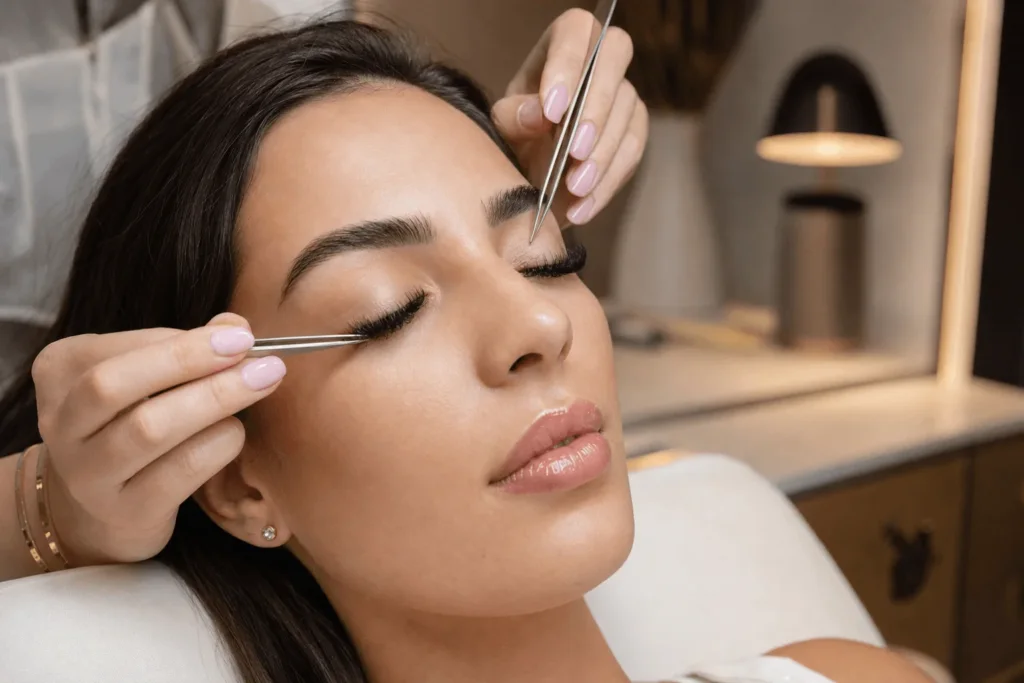
A refill appointment starts with a thorough brush-through and assessment. Your technician examines which lashes have shed, which extensions have grown out, and whether any lashes need removal because they’ve twisted or lost proper placement.
Removal comes next. Any outgrown extensions sitting too far from the lash line get gently dissolved and removed. Extensions clinging to lashes in the telogen phase are cleared. Cleaning follows removal using a gentle cleanser to remove oil, debris, and old adhesive residue from your natural lashes.
Application fills the gaps. Your technician applies new extensions to freshly grown lashes and areas where shedding created bare spots. At the Westmount and Laval studios, the team spends 45-90 minutes on most refill appointments, depending on how much shedding occurred and which lash style you wear.
Ready for perfect lashes?
Book your consultation today at our Westmount or Laval studio and let our certified lash technicians create your perfect look.
Factors That Affect Your Refill Schedule
Your refill timing isn’t one-size-fits-all. Multiple factors shift your ideal schedule forward or backward by days or even a full week.
Lash Style Impact: Classic vs Volume vs Hybrid Extensions
Classic extensions place one extension per natural lash. When a natural lash sheds, you lose that entire extension and see an obvious gap. Classic wearers typically need refills every 2 weeks to maintain coverage.
Volume extensions use 2-6 ultra-fine extensions per natural lash, creating a fan effect. When one natural lash sheds, you lose the entire fan, but the surrounding volume fans still provide coverage. Volume clients can often wait 2.5-3 weeks before gaps become noticeable.
Hybrid extensions combine classic and volume techniques. Your retention falls between pure classic and pure volume, typically requiring hybrid refills every 2-3 weeks depending on your natural shedding rate.
Montreal Climate and Seasonal Retention Challenges
Winter heating systems in Montreal drop indoor humidity to 20-30%, well below the 40-60% ideal range for lash adhesive. Clients often notice slightly faster shedding from November through March. Summer humidity and heat increase oil production on your skin and lashes. If you have naturally oily skin, you might need refills every 1.5-2 weeks during July and August because oil breaks down lash adhesive faster.
Swimming in chlorinated pools or saltwater accelerates extension loss. If you swim regularly during summer, plan refills every 2 weeks regardless of your lash style. At the Laval location, Baran adjusts adhesive formulations seasonally to account for temperature and humidity shifts that affect curing time and bond strength.
Lifestyle and Skincare Routine
Oil-based cleansers, makeup removers, and moisturizers dissolve lash adhesive. If your skincare routine includes oils, expect to need refills every 2 weeks or sooner. Sleeping position matters. Side sleepers who press their face into the pillow create friction that loosens extensions.
Frequent eye rubbing from allergies, dry eyes, or habit physically pulls extensions loose. Spring allergy season often shortens retention for affected clients. Mascara use on extensions, even if labeled as extension-safe, adds weight and attracts oil and debris.
If you notice sudden retention drops without changing your routine, check your skincare ingredients. Many clients don’t realize their new face cream contains mineral oil or coconut oil that migrates to the lash line overnight.
Signs It’s Time to Book Your Next Refill
Visible gaps along your lash line signal it’s time. If you can see bare patches when looking straight ahead in a mirror, you’ve hit the refill window. These gaps typically appear first at the outer corners where most people have fewer natural lashes.
Uneven length creates a jagged appearance instead of a smooth lash line. This happens when extensions on shorter natural lashes have shed while extensions on longer lashes remain, creating an inconsistent profile that looks patchy rather than polished.
Twisted or sideways extensions indicate growth. As your natural lash grows, the extension moves away from its original placement. When you notice multiple extensions sitting at odd angles, it’s time to book.
Decreased curl happens as extensions grow out. Fresh extensions sit close to your lash line where the natural curl starts. As they grow away from the base, gravity pulls them straighter, reducing the lifted appearance you had initially.
Loss of volume density means your lashes still have extensions but look noticeably thinner than they did at your last appointment. This is especially obvious in volume lash styles where fans should create constant fullness.
Taking selfies helps track changes. Compare photos from right after your last appointment to current photos. The difference shows you exactly how much coverage you’ve lost and whether you’re approaching the 2-3 week refill window.
Aftercare Practices That Maximize Time Between Fills
Daily brushing with a clean spoolie prevents tangling and distributes natural oils away from the lash line. Brush gently upward and outward, never side to side. Cleanse your lashes 3-4 times per week with an oil-free lash cleanser, focusing on the lash line where oil, dead skin, and makeup accumulate.
Avoid oil-based products within an inch of your eyes. This includes face oils, cleansing balms, and oil-based makeup removers. Switch to micellar water or gel cleansers near your eye area. Sleep on your back when possible. If you’re a side sleeper, use a silk pillowcase to reduce friction.
Skip waterproof mascara and eyeliner. Waterproof formulas require oil-based removers that break down lash adhesive. If you must use mascara, apply only water-based formulas to the tips, never the base.
Don’t pick, pull, or play with your extensions. Nervous habits like touching your lashes create mechanical stress that loosens extensions and can damage your natural lashes. Use a handheld fan or cool setting on your blow dryer after showering to help extensions dry faster and maintain their curl.
Protect your lashes during workouts. Sweat contains salt that can weaken adhesive bonds over time. Pat your face gently with a towel rather than rubbing, and rinse your lash line with cool water after intense exercise.
Schedule regular professional cleanings. Even with perfect home care, buildup occurs. The technicians at Labelle Eyes can deep-clean your lashes during refill appointments, removing debris that home cleansing misses and extending retention between fills.
Clients at both the Westmount and Laval locations receive detailed aftercare cards explaining these practices. Following them consistently can extend your refill window from 2 weeks to 2.5 or even 3 weeks for some lash styles.
When to Get a Full Set Instead of a Refill
The 40% rule is your guide. If 40% or more of your extensions have fallen out, a full set makes more practical and financial sense than a refill. Four weeks or longer since your last appointment typically crosses this threshold.
Uneven retention across both eyes sometimes means one eye needs significantly more work than the other. If the difference is dramatic, starting fresh with a full set creates better symmetry. Lash style changes always require a full set. You can’t effectively transition from classic to volume or change curl types during a refill.
Poor retention from a previous technician might mean the original application used incorrect adhesive, improper isolation, or unsuitable extension weights. A full removal and fresh start prevents compounding problems. The team at Labelle Eyes provides honest assessments during every appointment. For a deeper comparison, see our complete breakdown of fills versus full sets.
Cost Considerations and Refill Timing
Refills cost 40-60% less than full sets, making regular maintenance more affordable than repeatedly starting over. A classic refill typically runs $60-90, while a full classic set costs $150-200.
Waiting too long between appointments eliminates the refill option and forces you back to full-set pricing. Consistent 2-week refills cost less annually than inconsistent 4-week full sets. The math is simple: 26 refills per year at $75 each equals $1,950, while 13 full sets at $175 each equals $2,275.
Volume and mega volume refills cost more than classic refills because they’re more time-intensive. Expect to pay $90-130 for volume refills and $110-150 for mega volume, but they last slightly longer between appointments. For detailed pricing information specific to Montreal, see our comprehensive cost breakdown covering all lash styles and maintenance schedules.
Troubleshooting Guide: Sudden Retention Changes
If your lashes suddenly start falling out faster than usual, work through this diagnostic framework to identify the cause and find solutions. This structured approach helps you pinpoint the problem before your next appointment.
Step 1: Audit Your Skincare Products
Check every product you use near your eyes. Read ingredient lists on face cleansers, moisturizers, serums, eye creams, and makeup removers. Look for these retention-killing ingredients: glycerin, coconut oil, mineral oil, petroleum jelly, jojoba oil, argan oil, rosehip oil, and any ingredient ending in « oil » or « butter. » Products applied to your forehead, temples, or upper cheeks migrate to your lash line overnight through natural facial movement and pillow contact. If you find oils in your current products, switch to oil-free alternatives for two weeks and monitor whether retention improves.
Step 2: Review Medication and Supplement Changes
Document any new prescriptions, over-the-counter medications, or supplements started in the past 2-3 months. Hormonal treatments like birth control pills, thyroid medication, and hormone replacement therapy directly affect hair growth cycles. Antidepressants, blood pressure medications, and cholesterol drugs can also impact lash health. Even supplements marketed for hair growth like biotin can paradoxically affect retention for some people. Create a timeline comparing when you started each new medication to when retention changes began. Share this information with both your lash technician and prescribing doctor.
Step 3: Evaluate Stress and Sleep Patterns
Rate your stress level on a scale of 1-10 for the past three months. Major life events like job changes, moving, relationship issues, or family illness trigger telogen effluvium, where more follicles than normal enter the shedding phase. This stress-related shedding typically begins 2-3 months after the triggering event and can last several months. Track your sleep hours per night. Poor sleep quality affects hormone balance, which impacts lash growth. If you’re sleeping fewer than 6 hours nightly or experiencing insomnia, this could contribute to retention issues.
Step 4: Track Seasonal and Environmental Factors
Note the current season and compare retention to the same time last year if you have records. Montreal’s winter heating drops humidity below 30%, weakening adhesive bonds. Summer heat increases facial oil production, breaking down adhesive faster. Have you recently started using a humidifier or dehumidifier? Changed your home thermostat settings? Begun sleeping with a fan directly on your face? Environmental changes affect retention even when your personal habits stay consistent.
Step 5: Analyze Recent Activity Changes
List any new activities started in the past month: swimming, hot yoga, sauna visits, steam room use, increased cardio workouts, or new sports. Even small changes matter. Did you start wearing a sleep mask? Switch from glasses to contacts? Begin using a new hair product that drips during showering? Change your shampoo or conditioner? Start washing your face in the shower instead of at the sink? Each of these activities can impact how water, steam, or products contact your lashes.
Step 6: Compare Both Eyes for Clues
Examine whether retention loss is equal on both eyes or concentrated on one side. Take photos of each eye separately in the same lighting. Uneven retention usually indicates sleeping position issues if one side consistently sheds faster. Do you sleep on your right side and notice worse retention on your right eye? Habitual eye rubbing also typically affects one side more. Touch your face throughout the day and notice which eye you touch more frequently. One-sided retention issues point to mechanical rather than chemical causes.
Step 7: Document Patterns Over Multiple Appointments
Keep a lash journal tracking retention after each appointment. Note how many days before you see the first gaps, when thinning becomes obvious, and what percentage of extensions remain at your refill appointment. Take dated photos at 3-day intervals showing your lashes from the same angle in consistent lighting. After 3-4 appointments, patterns emerge. Consistent retention of only 10-12 days suggests product or environmental issues. Retention that varies wildly between appointments points to inconsistent aftercare or application technique.
Step 8: Communicate Findings to Your Technician
Share your documented observations before your next appointment. Bring your lash journal, photos, and lists of product ingredients or medication changes. The certified technicians at Labelle Eyes can correlate your findings with what they observe during application. They may recommend switching to a different adhesive formulation, trying a lighter extension weight, changing your lash style from classic to volume for better coverage, or adjusting curl type. Sometimes retention issues resolve simply by scheduling appointments 3 days earlier to maintain better coverage percentages.
Frequently Asked Questions
How often should you get lash extension refills?
Get lash extension refills every 2-3 weeks to maintain full coverage. Your natural lash growth cycle causes 20-30% shedding during this period. Classic lashes typically need refills every 2 weeks, while volume styles can sometimes stretch to 2.5-3 weeks because multiple extensions per lash provide more coverage between appointments.
Can I wait 4 weeks between lash refills?
Waiting 4 weeks usually means 40-60% of your extensions have shed, which requires a full set instead of a refill. At this point, there aren’t enough existing extensions to build upon efficiently. Most technicians recommend full sets after 4 weeks because the time and cost approach full-set levels anyway.
How long do lash extensions last without a refill?
Lash extensions last 4-6 weeks total before completely shedding with your natural lash cycle. However, they’ll look noticeably sparse after 3 weeks when 30-40% have fallen out. Most clients find their lashes lose the full appearance after 2.5-3 weeks, even though some extensions remain.
How much does a lash refill cost compared to a full set?
Lash refills cost 40-60% less than full sets. Classic refills typically run $60-90 while full classic sets cost $150-200. Volume refills range from $90-130 compared to $200-300 for full volume sets. Regular 2-3 week refills cost significantly less annually than repeatedly getting full sets.
Why are my lash extensions falling out faster than usual?
Sudden retention drops usually stem from new skincare products containing oils, hormonal changes from medication or stress, seasonal humidity shifts, or lifestyle changes like swimming. Oil-based cleansers and moisturizers are the most common culprits. Check product ingredients and contact your lash technician to troubleshoot the specific cause.
Keep Your Lashes Looking Perfect Year-Round
Understanding your refill timing transforms lash extensions from a high-maintenance splurge into a sustainable beauty routine. The 2-3 week standard exists because it aligns with your natural lash growth cycle, maintaining the full coverage you saw when you first left the studio.
Your individual schedule depends on your lash style, lifestyle, and how consistently you follow aftercare practices. Classic wearers typically need biweekly appointments, while volume clients can sometimes stretch an extra week. Montreal’s seasonal climate shifts mean winter retention differs from summer, and hormonal changes throughout your life will affect your lash cycle in ways you can work with rather than fight against.
Since 2014, the certified lash technicians at Labelle Eyes have helped thousands of Montreal clients find their ideal refill rhythm. Benny, Bahareh, Yasmine, and Baran assess lash health, track retention patterns, and adjust techniques to give you the longest-lasting results possible. Whether you visit the Westmount location at 4055 Saint-Catherine St W or the Laval studio at 3742 Boulevard Levesque O, you’ll receive the same expert care backed by a 4.9 Google rating.
Ready to start your lash journey or find a refill schedule that actually works with your lifestyle? Book your appointment at either our Westmount or Laval studio, or call (438) 408-6826 to discuss which lash style and maintenance plan fits your needs. Your perfect lashes are waiting.