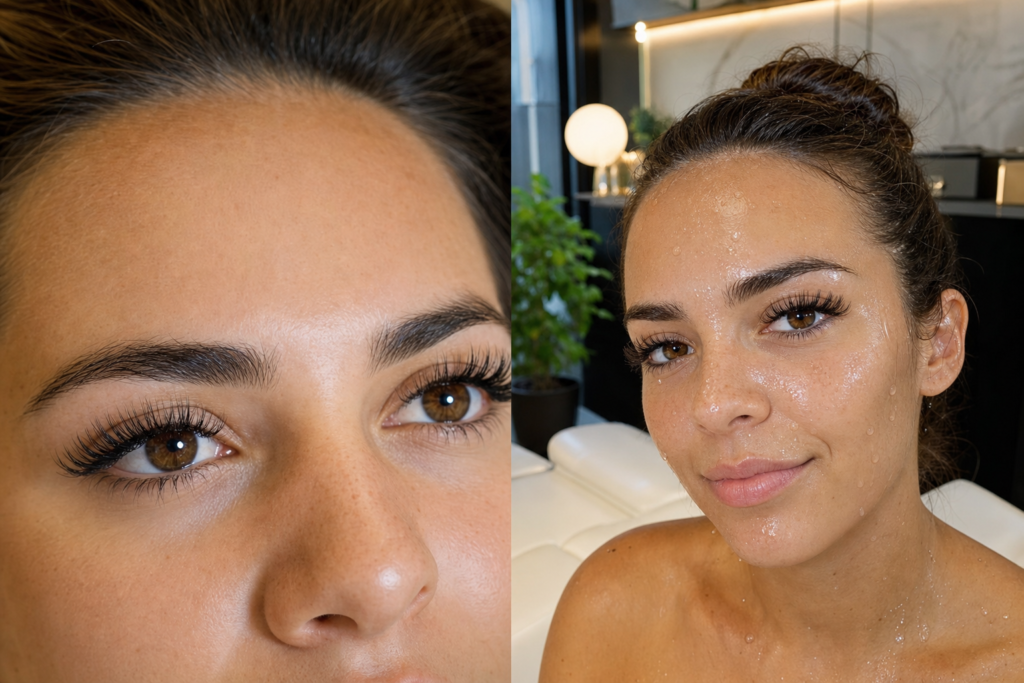
Here’s something most first-time lash clients don’t expect: your extensions can absolutely survive pool days, beach trips, and hot tub sessions. The catch? Timing matters more than you think. While water itself won’t dissolve professional-grade lash adhesive once it’s fully cured, exposing your fresh extensions too early can compromise retention before you’ve even had a chance to show them off. The chemistry behind lash bonding requires patience, and understanding the relationship between water exposure and adhesive integrity transforms how you care for your investment.
The straight answer is yes, you can swim with eyelash extensions, but not immediately after application. The nuance lies in understanding adhesive cure time, water composition, and protective aftercare strategies that preserve both the bond strength and the aesthetic quality of your lashes through every stroke and splash.
Understanding Lash Adhesive and Water Interaction
Professional lash adhesive works through a chemical process called polymerization. When your lash tech applies a semi-permanent extension to your natural lash, the cyanoacrylate-based adhesive begins bonding immediately but requires time to achieve full cure strength. This curing process depends on ambient humidity and temperature, typically taking 24 to 48 hours to reach maximum durability.
Water exposure during this critical curing window introduces problems. Premature moisture can cause shock polymerization, where the adhesive hardens too rapidly, creating a brittle bond instead of a flexible, resilient one. This manifests as extensions that shed within days rather than lasting their expected 4-6 week cycle. The microscopic integrity of each bond determines retention, and rushed curing compromises that foundation.
At Labelle Eyes in Westmount and Laval, we use medical-grade adhesives specifically formulated for optimal cure time and flexibility. Our certified technicians, including Bahareh and Yasmine, emphasize the 48-hour no-water rule during every consultation because we’ve seen firsthand how adherence to this timeline affects retention rates. Clients who respect this window consistently experience 5-6 week wear between fills, while those who swim or shower too early often need touch-ups within two weeks.
Once fully cured, the adhesive becomes water-resistant, not waterproof. It tolerates water exposure beautifully but doesn’t love prolonged submersion, especially in chemically treated or salt water. Think of it like quality mascara: it handles your daily routine effortlessly but struggles with extended underwater time.
The 48-Hour Rule: Why Wait Before Swimming
Every lash technician worth their tweezers will tell you the same thing: keep your extensions completely dry for the first 48 hours. No swimming. No steamy showers. No sweaty gym sessions. This waiting period isn’t arbitrary perfectionism but chemical necessity.
During these first two days, the adhesive transitions from a liquid state to a solid polymer network. Humidity from the air aids this process gradually, but direct water contact accelerates it unnaturally. When water molecules encounter partially cured adhesive, they trigger immediate hardening in a phenomenon that looks successful but creates internal stress points. These weakened bonds might hold initially but fail rapidly under normal wear.
Consider what happens when you schedule your lash appointment strategically. Book your full set on a Thursday evening, avoid water Friday and Saturday, and by Sunday you’re pool-ready for the rest of the summer. That simple timing adjustment protects your investment better than any aftercare product.
Some clients ask about shorter wait times with newer adhesive formulations. While adhesive technology continues improving, the 48-hour standard remains industry best practice in 2026. Rushing this timeline gambles with retention, and extensions that shed prematurely cost more in maintenance fills than the patience required upfront.
| Time After Application | Adhesive Cure Status | Water Exposure Risk | Swimming Recommendation |
|---|---|---|---|
| 0-24 hours | Initial polymerization | Extremely high | Avoid all water contact |
| 24-48 hours | Partial cure strength | High | Light face washing only |
| 48-72 hours | Near-complete cure | Moderate | Brief swimming acceptable |
| 72+ hours | Full cure achieved | Low with proper care | Regular swimming with precautions |
Swimming in Chlorinated Pools with Lash Extensions
Chlorine presents the biggest chemical challenge for lash extensions. This powerful oxidizer doesn’t directly break down cured adhesive, but it degrades the protein structure of both natural lashes and synthetic extensions over time. Prolonged chlorine exposure causes extensions to become brittle, discolored, and prone to premature shedding.
The concentration matters significantly. Public pools typically maintain chlorine levels between 1-3 parts per million, while residential pools often run higher during maintenance periods. Hot tubs compound the problem by combining chlorine with heat, which accelerates chemical reactions and softens adhesive bonds slightly.
Protection strategies make all the difference. Before diving in, wet your lashes with fresh tap water. This simple step fills the porous structure of your extensions with clean water, reducing chlorine absorption. After swimming, rinse your lashes thoroughly with fresh water and gently cleanse with a lash-safe cleanser to remove chlorine residue.
We recommend our clients at Labelle Eyes who swim regularly opt for Hybrid Eyelash Extensions in Montreal rather than full Mega Volume sets. The hybrid application combines classic and volume techniques, creating beautiful fullness with slightly less surface area exposed to pool chemicals. This practical adjustment extends retention for swimmers without sacrificing the dramatic effect most clients desire.
Frequent swimmers should also consider shortening the time between fills. Instead of pushing to six weeks, schedule maintenance appointments every three to four weeks. This proactive approach keeps your lash line consistently full despite slightly accelerated shedding from chemical exposure.
Ocean Swimming and Salt Water Considerations
Salt water proves gentler on lash extensions than chlorinated pools, though it brings its own concerns. Ocean water doesn’t contain harsh chemicals, but its high mineral content can leave crystallized deposits on extensions that create a crunchy texture and dulled appearance.
The mechanical action of waves poses more risk than the water itself. Powerful surf can tangle extensions, bend them at unnatural angles, or catch them against sandy surfaces. These physical stresses test bond strength more severely than chemical exposure.
Beach days require strategic planning. Apply a thin layer of waterproof sunscreen around your eyes, carefully avoiding the lash line. Salt water contact is inevitable, but you can minimize duration. After swimming, find a freshwater shower or use bottled water to rinse your lashes before salt crystals form. Pat them gently with a clean towel, then allow complete air drying before applying any products.
The combination of salt, sun, and sand demands extra diligence. Bring a small bottle of lash cleanser in your beach bag and cleanse thoroughly that evening. Salt residue left overnight attracts moisture from the air, keeping your lash line perpetually damp and creating an environment where bacteria thrive.
Post-Swim Lash Care Routine
What you do after swimming matters as much as how you swim. Proper post-swim care neutralizes potential damage and keeps extensions looking freshly applied week after week.
Immediately after leaving the water, rinse your face and lashes with fresh water. This doesn’t require a full shower, just enough clean water to flush away chlorine, salt, or other contaminants. Avoid rubbing or pulling. Let the water flow over your lashes naturally.
Once home, perform a thorough lash cleanse. Use a lash extension-safe foaming cleanser applied with a soft brush or clean fingertip. Work the cleanser gently along the lash line where the extensions bond to natural lashes, the area most vulnerable to product buildup and bacterial growth. Rinse completely with room-temperature water.
Drying technique determines whether your extensions maintain their curl or end up looking droopy and misaligned. Never use a hair dryer or heated tool. Instead, gently pat your lashes with a lint-free towel to remove excess water, then use a clean spoolie brush to separate and lift the lashes while they air dry. This takes only two minutes but preserves the curl pattern and prevents lashes from drying stuck together.
The final step involves checking for any loosened extensions. Swimming can reveal extensions that were already nearing the end of their natural shed cycle. If you notice any hanging by a thread, contact your lash tech rather than pulling them yourself. Premature removal damages natural lashes and disrupts the growth pattern.
| Aftercare Step | Timing | Purpose | Common Mistake |
|---|---|---|---|
| Immediate rinse | Within 5 minutes of leaving water | Remove chlorine/salt before drying | Waiting until home to rinse |
| Deep cleanse | Within 1-2 hours | Eliminate all chemical residue | Using oil-based cleansers |
| Gentle drying | Immediately after cleansing | Preserve curl and prevent tangling | Rubbing with rough towels |
| Brushing | Once completely dry | Restore separation and alignment | Brushing while wet |
Protection Strategies for Regular Swimmers
If swimming forms a regular part of your routine, whether for fitness, recreation, or professional reasons, specific strategies help you maintain beautiful extensions without constant maintenance appointments.
Consider wearing swimming goggles. While this seems obvious for competitive swimmers, recreational swimmers often skip them. Quality goggles that seal properly keep water away from your lash line entirely, eliminating chemical exposure during your swim. The brief goggle marks around your eyes fade within 20 minutes, a small trade-off for significantly better retention.
Volume and length selection matters more for swimmers than other clients. At Labelle Eyes, when we consult with regular swimmers at our locations on Saint-Catherine St W in Westmount or Boulevard Levesque O in Laval, we often suggest moderate curl types and lengths. A C or D curl in 10-12mm length provides beautiful enhancement while creating less surface area for water and chemical interaction compared to dramatic CC curl or 14mm extensions.
Application technique plays a role too. Our technicians Benny and Baran use isolation and bonding methods that prioritize retention for active lifestyles. This means slightly thicker adhesive application at the base, careful attention to natural lash direction, and strategic placement that accounts for how water flow affects lash positioning during swimming.
Maintenance schedules need adjustment for frequent swimmers. Book fills every 2-3 weeks instead of the standard 3-4 week cycle. This more frequent schedule means you’re never walking around with noticeably sparse patches, and each appointment requires less time and money than trying to restore a set that has degraded significantly.
Some swimmers alternate between extensions and lash lifts seasonally. During peak swimming months, they switch to a Lash Lift & Tint that enhances natural lashes without adhesive concerns. Then they return to extensions during months when swimming decreases. This approach provides year-round enhancement tailored to lifestyle demands.
When Swimming Might Damage Your Extensions
Certain swimming scenarios present higher risk regardless of how careful you are. Recognizing these situations helps you make informed decisions about whether to swim or protect your investment differently.
Extremely chlorinated water during pool opening or shock treatment periods can overwhelm even the best adhesive. If you notice a strong chemical smell or your eyes sting immediately upon entering the water, chlorine levels are probably too high for comfortable swimming with extensions. Wait a day or two for levels to balance.
Diving and underwater activities stress extensions mechanically. The force of water against your face during dives, combined with potential contact with pool walls or other swimmers, can bend or snag extensions. If diving is part of your swimming routine, expect slightly reduced retention and more frequent fills.
Hot tubs combine multiple risk factors: high temperature, elevated chemical concentrations, and often extended immersion time. The heat softens adhesive temporarily while chemicals work to degrade it. Fifteen minutes in a hot tub can equal an hour in a regular pool in terms of wear on your extensions.
Swimming immediately after crying or eye irritation creates problems because your natural lashes are already weakened and the follicles are stressed. The combination of compromised natural lashes and water exposure increases shedding risk. Wait a day after any eye irritation before swimming.
Alternative Options for Water Lovers
If you find that swimming and extensions don’t mesh well with your lifestyle, several alternatives provide beautiful lashes without adhesive maintenance concerns.
A lash lift and tint enhances your natural lashes by curling them upward and darkening them with semi-permanent dye. This treatment lasts 6-8 weeks and requires zero aftercare once the initial 24-hour setting period passes. You can swim, shower, and exercise immediately thereafter with no impact on results. Many swimmers find this option more practical than extensions during active months.
For special occasions, high-quality strip lashes or magnetic lashes offer temporary enhancement. Apply them after swimming and remove them before bed. This approach gives you dramatic lashes for evening events while keeping daytime activities unrestricted.
Some clients adopt a hybrid lifestyle approach. They maintain extensions during their less active seasons and switch to lash lifts during summer months or vacation periods. We’ve helped numerous clients transition between these services at Labelle Eyes, and the flexibility allows them to always have enhanced lashes appropriate to their current lifestyle demands.
If you truly cannot live without extensions but swim daily, consider maintaining a more natural look with Classic Eyelash Extensions. The single-lash application technique creates less surface area for chemical interaction and sheds less noticeably than volume sets when a few extensions release between fills.
Frequently Asked Questions
How long after getting lash extensions can I swim?
Wait a minimum of 48 hours after your lash application before swimming. This allows the adhesive to fully cure and reach maximum bond strength. Swimming before complete curing can cause premature shedding and significantly reduce retention. Schedule your lash appointment strategically if you have planned swimming activities, allowing two full days between application and water exposure.
Will chlorine ruin my eyelash extensions?
Chlorine won’t immediately destroy extensions, but frequent exposure degrades both the synthetic fibers and adhesive bond over time. The chemical causes extensions to become brittle and discolored while weakening retention. Rinse your lashes with fresh water immediately after swimming and cleanse thoroughly with a lash-safe cleanser to minimize chlorine damage. Regular swimmers should expect to book fills more frequently, typically every 2-3 weeks instead of 4-6 weeks.
Can I open my eyes underwater with lash extensions?
Opening your eyes briefly underwater won’t damage fully-cured extensions, but prolonged underwater eye opening increases water contact time and mechanical stress on the bonds. Wearing goggles provides the best protection by keeping water away from your lash line entirely. If you do open your eyes underwater, rinse with fresh water and cleanse as soon as possible after swimming.
Should I avoid getting my face wet with eyelash extensions?
After the initial 48-hour curing period, normal face washing and brief water exposure is perfectly fine and actually necessary for lash hygiene. Daily gentle cleansing with lash extension-safe products removes oil, debris, and bacteria that can compromise retention and eye health. Avoid prolonged water submersion, steam rooms, and high-pressure water directly on your lash line, but regular washing maintains both extension longevity and eye health.
What’s the best lash style for someone who swims regularly?
Hybrid extensions offer the ideal balance for regular swimmers, providing beautiful volume with less surface area exposed to chemicals compared to mega volume sets. Choose moderate lengths of 10-12mm and C or D curls rather than dramatic CC curls. This creates an enhanced but practical look that withstands swimming better while still delivering the fullness most clients desire. Schedule maintenance fills every 2-3 weeks to keep your lashes looking consistently full.
Swimming and eyelash extensions can absolutely coexist with proper timing, care, and realistic expectations. The 48-hour waiting period after application protects your investment by allowing adhesive to cure completely. Once that critical window passes, swimming becomes manageable with immediate post-swim rinsing, thorough cleansing, and gentle drying techniques. Regular swimmers benefit from strategic choices in extension style, modified maintenance schedules, and sometimes protective measures like goggles.
Ready to enjoy beautiful lashes all summer long? Our team at Labelle Eyes understands the unique challenges Montreal swimmers face, from maintaining extensions through hot, humid Quebec summers to managing pool and beach activities. With over a decade of experience since 2014 and a 4.9 Google rating, our certified technicians provide personalized consultations that match your lash goals to your lifestyle. Book your appointment at our Westmount location at 4055 Saint-Catherine St W, Unit 115, or our Laval studio at 3742 Boulevard Levesque O by visiting https://labelleeyes.com/prendre-rendez-vous/ or calling (438) 408-6826. Let’s create a lash look that works with your active life, not against it.