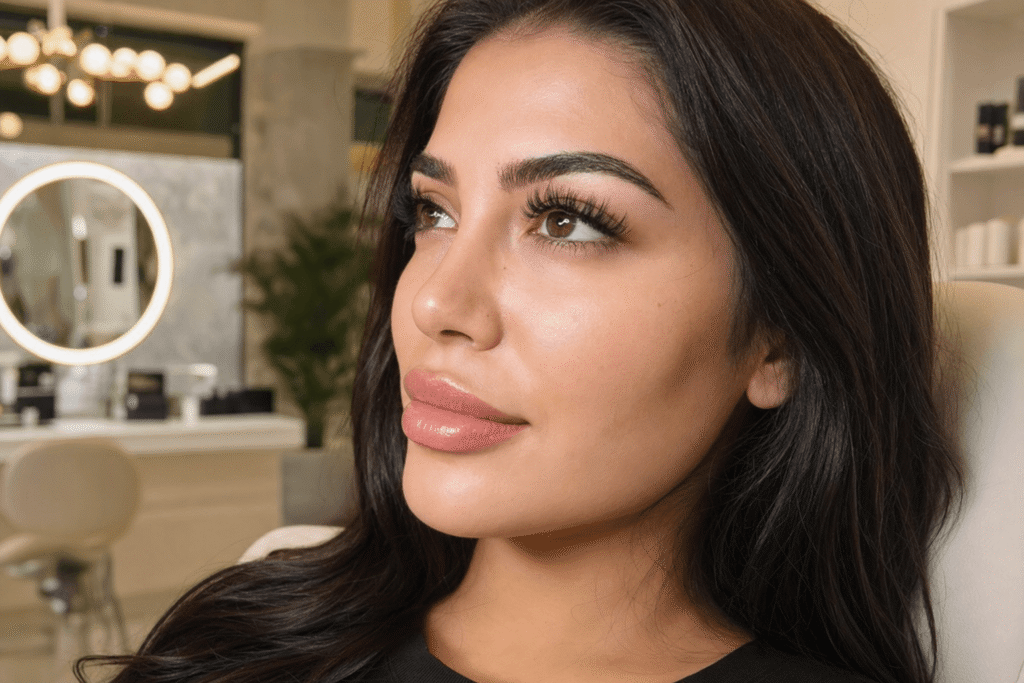
The question of whether lash extensions are haram sits at the intersection of faith, beauty, and personal interpretation. It’s a conversation that unfolds quietly in lash studios across Montreal, where Muslim women arrive with genuine questions about whether synthetic fibers bonded to their natural lashes conflict with Islamic teachings. The answer isn’t always straightforward, and it varies based on scholarly interpretation, intention, and the specific type of enhancement you’re considering.
This guide explores the religious considerations around are lash extensions haram, the practical realities of performing wudu with extensions, and how some Muslim women navigate their faith while still enjoying enhanced lashes. Whether you’re researching this for yourself or simply curious, you’ll find thoughtful perspectives from both Islamic scholarship and the lash industry itself.
Understanding the Islamic Perspective on Lash Extensions
Islamic rulings on beauty enhancements hinge on several key principles: whether the modification is temporary or permanent, whether it mimics non-believers’ practices (tabarruj), and whether it involves deception. Lash extensions fall into a nuanced category because they’re semi-permanent but not altering Allah’s creation permanently like tattoos or surgical changes.
Most classical Islamic scholars prohibit hair extensions that use human or animal hair (except a husband’s hair for his wife). This prohibition stems from hadiths that specifically mention false hair as cursed. However, lash extensions use synthetic fibers, typically PBT (polybutylene terephthalate), not human hair. This material distinction matters significantly in many scholarly interpretations.
The intention behind wearing extensions also factors heavily into the ruling. Are you wearing them to deceive others about your natural appearance, or are you simply enhancing what Allah gave you? Are you displaying your beauty publicly to non-mahram men, or keeping it private for your spouse and female companions? These questions shape whether an individual scholar or school of thought considers the practice permissible.
Some contemporary Islamic scholars permit lash extensions if they’re made of synthetic materials, don’t prevent wudu, and are worn modestly (not as tabarruj). Others maintain that any beautification beyond natural grooming constitutes changing Allah’s creation and should be avoided. The diversity of opinion reflects the fact that lash extensions didn’t exist during the time of the Prophet Muhammad (peace be upon him), requiring modern scholars to apply general Islamic principles to new situations.
Wudu and Prayer Considerations with Lash Extensions
For Muslim women, the practical question of wudu often matters more than abstract theological debates. Wudu requires water to reach your natural lashes during the washing ritual. If lash extensions create a barrier that prevents water from touching your biological lashes, they could invalidate your wudu and, by extension, your prayers.
The reality: properly applied lash extensions don’t typically prevent water from reaching your natural lashes. At Labelle Eyes’ Westmount and Laval studios, Benny and the team apply individual synthetic lashes to each natural lash using a semi-permanent adhesive. The bond sits about 0.5-1mm away from your eyelid, leaving the lash base exposed. When you perform wudu, water can flow through and around the extensions to reach your natural lashes and skin.
However, retention depends partly on keeping your lashes dry for the first 24 hours after application and limiting excessive water exposure long-term. This creates a practical tension: wudu requires washing your face five times daily, which can reduce how long your extensions last. Most Muslim clients who wear extensions at our studio accept that their lashes may need more frequent infills (every 2-3 weeks instead of 3-4 weeks) due to their wudu routine.
Some women choose to remove their extensions during Ramadan when they’re praying more frequently, then reapply them afterward. Others opt for a lash lift and tint instead, which enhances natural lashes without adding any foreign material that could raise wudu concerns.
Expert Tip from Labelle Eyes
When Muslim clients ask Benny about wudu compatibility, she recommends using a very light hand during facial washing and patting lashes dry rather than rubbing. This approach helps maintain retention while ensuring water reaches your natural lashes during ablution.
Different Types of Lash Enhancements and Their Rulings
Not all lash enhancements are created equal from an Islamic perspective. Understanding the differences helps you make an informed decision that aligns with your interpretation of Islamic law.
Individual Lash Extensions
Classic lash extensions involve bonding one synthetic fiber to each natural lash. They’re semi-permanent, lasting 4-6 weeks with proper care, and use synthetic PBT material rather than animal or human hair. Since they don’t use prohibited materials and don’t necessarily prevent wudu, many Muslim women consider them permissible, especially when consulting scholars who take a more lenient view on cosmetic enhancements.
Hybrid and volume extensions follow the same principle but create a fuller look. Volume techniques apply 2-6 ultra-fine extensions to each natural lash, creating dramatic density. The material remains synthetic, and the wudu consideration stays the same, but the visual impact is more pronounced, which some women feel crosses into excessive beautification.
Lash Lifts
A lash lift is a perm for your natural lashes. It curls and lifts them from the root, creating the illusion of length and openness without adding any foreign materials. Many Muslim women who feel uncomfortable with extensions choose lash lifts because they only work with what Allah gave them, enhancing rather than adding. There’s no material bonded to your lashes, no wudu concerns, and no question about prohibited substances.
Strip Lashes and Magnetic Lashes
Temporary false lashes that you remove daily avoid most Islamic concerns because they’re not deceptive (everyone knows they’re temporary), they don’t interfere with wudu (you remove them before prayer), and they don’t involve semi-permanent alteration. However, if worn in public to attract non-mahram attention, they could still fall under prohibitions against tabarruj.
| Enhancement Type | Material Used | Duration | Wudu Concern Level | Common Scholarly View |
|---|---|---|---|---|
| Classic Extensions | Synthetic PBT fiber | 4-6 weeks | Low to moderate | Varies by scholar |
| Volume Extensions | Synthetic PBT fiber | 4-6 weeks | Low to moderate | Varies by scholar |
| Lash Lift | Chemical solution on natural lashes | 6-8 weeks | None | Generally permissible |
| Strip Lashes | Synthetic or mink (daily wear) | Removed daily | None (removed for wudu) | Permissible with modest intent |
| Lash Tint | Vegetable-based dye | 3-4 weeks | None | Generally permissible |
LABELLE EYES
Ready for perfect lashes?
Book your consultation today at our Westmount or Laval studio and let our certified lash technicians create your perfect look.
What Contemporary Scholars Say About Lash Extensions
Modern Islamic scholars have addressed cosmetic procedures like lash extensions with varying degrees of permissiveness. Their rulings often depend on their broader approach to beautification and their interpretation of what constitutes “changing Allah’s creation.”
Scholars who permit lash extensions typically emphasize that the prohibition in hadith specifically mentions hair extensions using human or animal hair. Since synthetic lash extensions use man-made fibers, they argue these fall outside the original prohibition’s scope. They compare it to wearing synthetic wigs (which some scholars permit) rather than natural hair extensions (which most prohibit).
These permissive scholars also note that the enhancement is temporary. Unlike tattoos or plastic surgery that permanently alter your appearance, lash extensions grow out with your natural lash cycle. The impermanence places them in a different category from modifications that “change Allah’s creation” irreversibly.
Scholars who prohibit or discourage lash extensions often cite the principle that beautification should be minimal and directed only toward one’s husband. They argue that even synthetic enhancements can constitute tabarruj (displaying beauty) if worn in public or if they significantly alter your appearance in a way that deceives others about your natural features.
Some scholars take a middle position: lash extensions are makruh (disliked but not sinful) rather than outright haram. This means you won’t be punished for wearing them, but it’s spiritually preferable to avoid them. This nuanced view acknowledges that reasonable people can differ on whether synthetic enhancements cross the line from permissible grooming into prohibited alteration.
Practical Alternatives for Muslim Women
If you’re uncertain about whether lash extensions align with your understanding of Islamic law, several alternatives provide lash enhancement without the same level of religious concern.
Lash Serums and Natural Growth
Peptide-based lash serums encourage your natural lashes to grow longer and thicker over 8-12 weeks. Because you’re enhancing what Allah gave you rather than adding artificial materials, this approach sits comfortably within most Islamic interpretations. The downside: results vary significantly between individuals, and you need consistent daily application.
Lash Lift and Tint Combination
The lash lift and tint combo creates dramatic results using only your natural lashes. The lift curls them upward from the root, while the tint darkens them so they’re visible without mascara. At Labelle Eyes, Bahareh specializes in customizing the curl degree to each client’s eye shape, creating an effect that looks like you’re wearing mascara 24/7 but using only what you were born with.
This option eliminates wudu concerns entirely since there’s no foreign material bonded to your lashes. The chemical solutions used in the lifting process don’t remain on your lashes after treatment, so they don’t create a barrier to water during ablution. Results last 6-8 weeks, longer than extensions for many women who perform wudu multiple times daily.
Careful Mascara Application
High-quality mascara with a good primer can create impressive length and volume without any semi-permanent modification. The key advantage for Muslim women: you remove it completely before wudu, eliminating any barrier concerns. Modern tubing mascaras come off easily with just warm water, making removal quick and thorough before prayer times.
Expert Tip from Labelle Eyes
Yasmine often recommends lash lifts to Muslim clients who love the low-maintenance aspect of extensions but worry about wudu. The lift keeps your lashes curled even when wet, so you still wake up with definition after washing your face for fajr prayer.
Making a Decision That Honors Your Faith
Deciding whether lash extensions fit within your practice of Islam requires honest self-reflection about your intentions and consultation with scholars you trust. Start by identifying which school of thought or contemporary scholar you typically follow for religious guidance. Their perspective on cosmetic enhancements in general will likely guide their specific view on lash extensions.
Consider your motivation. Are you getting extensions to feel confident in your daily life, or are you seeking to attract attention from non-mahram men? Are you planning to wear hijab over them (keeping them private) or displaying them publicly? Your intention (niyyah) matters significantly in Islamic jurisprudence, and many rulings on borderline issues depend on the heart’s purpose.
Evaluate the practical impact on your worship. If maintaining extensions means you’re cutting corners during wudu or feeling spiritually distracted during prayer, that’s a sign they may not be right for you regardless of their technical permissibility. Your relationship with Allah should take precedence over any beauty enhancement.
Talk to other Muslim women in your community who wear extensions or have researched the issue. Their lived experience can provide practical wisdom that complements scholarly opinions. At Labelle Eyes’ locations in Westmount and Laval, our team has worked with dozens of Muslim clients over the past decade, each navigating this question differently based on their personal interpretation and the scholars they consult.
Remember that Islamic law allows for differences of opinion (ikhtilaf) on issues not explicitly addressed in the Quran or authentic hadith. Lash extensions fall into this category. Two sincere Muslim women can reach different conclusions about their permissibility while both acting in good faith according to their understanding. What matters most is that you’ve made a thoughtful, informed decision after sincere consultation and reflection.
The Role of Intention in Islamic Beauty Practices
In Islamic jurisprudence, intention (niyyah) transforms neutral actions into worship or sin. The same principle applies to beauty enhancements like lash extensions. The physical act of bonding synthetic fibers to your lashes is morally neutral; what gives it ethical weight is why you’re doing it and how you use the result.
If your intention is to feel confident, take pride in your appearance in a way that pleases Allah, or beautify yourself for your husband, many scholars would view this favorably even if they have reservations about the practice itself. Islam encourages cleanliness, grooming, and taking care of your appearance as part of honoring the body Allah gave you.
However, if your intention is to deceive others about your natural appearance, compete with other women in displays of beauty, or attract inappropriate attention from men, the same physical enhancement takes on a different moral character. This distinction explains why some women feel spiritually comfortable wearing extensions while others in the same community do not; they’re operating from different intentions even if the external result looks identical.
The concept of tabarruj (displaying beauty in public in a way that attracts attention) also depends partly on intention. A woman wearing modest extensions under her hijab, visible only to her husband and female relatives, has a fundamentally different situation than one wearing dramatic lashes to attract attention in mixed company. The physical enhancement may be identical, but the Islamic ruling differs based on context and intent.
When Benny consults with clients at Labelle Eyes who raise religious concerns, she often asks what they hope to gain from extensions and in what contexts they’ll be worn. These questions help clients clarify their own intentions, which is the first step in making a decision that honors both their faith and their desire for self-expression.
Key Takeaways
- Consult trusted Islamic scholars about lash extensions before booking your appointment
- Choose lash lifts over extensions if wudu concerns outweigh enhancement benefits
- Expect more frequent infills every 2-3 weeks if performing wudu five times daily
- Ask your lash tech about application techniques that minimize water barrier concerns
- Consider removing extensions during Ramadan for easier prayer routine maintenance
- Book a consultation to discuss halal-friendly options with experienced technicians
Frequently Asked Questions
The question of whether lash extensions are haram ultimately comes down to your personal interpretation of Islamic law, the scholars you consult, and your honest assessment of your intentions. What matters most is making a thoughtful decision that honors both your faith and your desire for self-expression, then moving forward with confidence in your choice.
Benny and the certified lash technicians at Labelle Eyes have been guiding Montreal women through these decisions since 2014, offering everything from dramatic volume sets to subtle lash lifts that work purely with your natural lashes. Whether you’re looking for extensions or exploring alternatives that align more closely with your religious practice, our Westmount and Laval studios provide judgment-free consultations where your concerns are heard and respected. Book your consultation today to discuss which option feels right for your unique situation, and let’s find an approach to lash enhancement that makes you feel confident without compromising your values.